CISP remains firmly committed to supporting communities affected by the war in Lebanon through timely, principled, and context-responsive humanitarian action.
Simone Abou Jaoudeh, CISP Country Representative in Lebanon
Lebanon has plunged into a new and devastating phase of hostilities that began on March 2, 2026. In this scenario of extreme fragility, CISP—which has been present in the country since 1996—immediately activated its response capacity to support the thousands of families.
To address immediate needs, CISP has quickly reached an agreement to reallocate a portion of funds from ongoing AICS emergency projects. These resources will be used to distribute essential goods to displaced families and to improve conditions in collective shelters. Additionally, dialogue continues with the network of donors and humanitarian actors to expand the intervention in response to growing needs.
Our Actions on the Ground
To date, CISP’s interventions have focused on:
- Rapid Technical Assessments: Conducted in numerous collective shelters across Beirut and the Mount Lebanon Governorate (Aley, Chouf, Baabda, Jbeil, and Keserwan) to identify urgent needs.
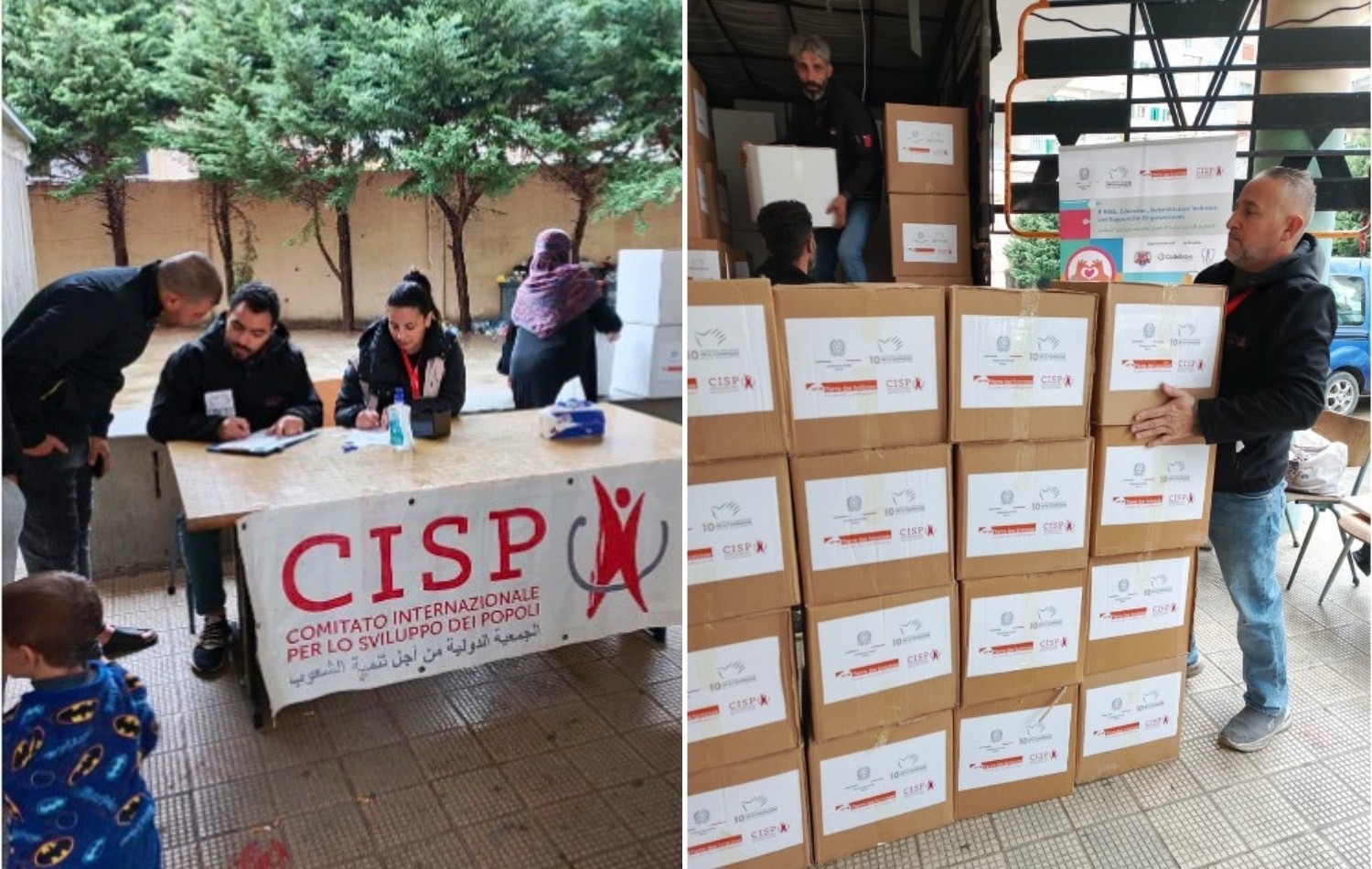
- Distribution of Hygiene Kits: We have already reached 544 families hosted in public schools that have been converted into collective shelters in Mount Lebanon.
- WASH Interventions and Infrastructure: We are planning hydraulic and sanitary rehabilitation works in school shelters. Simultaneously, in the North of the country, we are completing the construction of water infrastructure to ensure safe drinking water for dozens of families.
- Coordination: CISP actively participates in international WASH and Shelter working groups with institutions and other international bodies to ensure aid is effective and to avoid duplication of efforts.
The Situation in Lebanon in April 2026
The current escalation has generated an unprecedented humanitarian crisis, exacerbating a catastrophic economic collapse that began in 2019.
- Mass Displacement: An estimated 1,200,000 people have been forced to flee their homes. Approximately 620,000of them are women and girls (UNFPA sitrep, April 9th).
- Childhood Emergency: Over 367,000 children are internally displaced. Schools have become the heart of the response, with 486 institutions currently used as collective shelters, making regular educational activities impossible Disaster Risk Management).
- A Collapsing Healthcare System: Between March 2 and April 6, 2026, 1,497 people were killed and 4,639 were injured (OCHA flash update n.15, published on Aprile 9th). There have been 79 reported attacks against health facilities, leading to the closure of 5 hospitals and leaving 51 primary healthcare centers non-operational. These attacks, which violate international humanitarian law and UN Security Council Resolution 2286, have caused 119 injuries and 42 deaths.
- Isolation and Limited Access: Evacuation orders in Southern Lebanon have isolated approximately 150,000 people, including more than 1,700 pregnant women, drastically limiting access to humanitarian aid (UNFPA).
How You Can Help
The situation remains fluid, and needs are growing by the hour. Your support is essential to allow us to continue distributing hygiene kits and food, and to provide access to clean water for those who have lost everything.
Donate now to the Lebanon Emergency. Every contribution, large or small, makes a difference for a displaced family.
DONATE TO CISP. Please write "Lebanon Emergency" in the notes of your donation.

 Español
  Français
  Italiano
  English